Toddler Swimming Course in Singapore
Gentle 30-minute swimming lessons for toddlers 4 and below, with a separate baby programme for 2 and below. Here is what toddlers learn, how lessons run and what they cost.
Who a toddler swimming course suits
A toddler swimming course is for children roughly 4 years old and below who are not yet ready for a full kids class. At this age the aim is not stroke technique. It is getting comfortable in water, learning to follow simple instructions from an instructor, and building early safety habits that the later courses build on.
Signs a toddler is ready to start:
- Can walk steadily and stand in shallow water with help
- Can manage about 30 minutes of activity with short breaks
- Can follow a simple instruction such as "kick your legs" or "hold the wall"
- Enjoys bath time or splashing, or at least is not frightened by water on the face
- Is generally well and not overly tired at the lesson time you pick
A toddler who cries at the first lesson is not "not ready". Many young children need two or three sessions before they settle. If your child is very anxious around water, the water confidence course explains how a slower, confidence-first start works.
Baby swimming lessons (2 years and below)
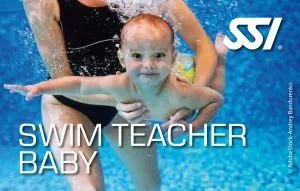
Swim2u runs a separate baby programme for children 2 and below, also in 30-minute lessons. Baby lessons are gentler still: holding positions, floating with full support, songs and repetition, and getting used to the feel of water and the pool environment. There is no expectation that a baby will "swim" on their own.
For details of the baby programme, see Swim2u's swimming lessons for babies page. If you are unsure whether to start now or wait, our guide to the best age to learn swimming covers the trade-offs.
Does the parent go into the water?
This depends on the child's age, the venue and the format of the class, so it is best to ask when you enquire. Either way, plan to be poolside for the whole lesson. Toddlers often look back for a parent, and your calm presence helps. Try not to call out instructions during the lesson; one voice from the instructor is easier for a young child to follow.
What toddlers learn, in order
Progress at this age is built in small layers. A typical toddler course works through these stages, moving on only when the child is comfortable:
- Water familiarisation. Entering the pool calmly, splashing, pouring water over shoulders and head, walking or being moved through the water.
- Submersion readiness. Blowing bubbles, putting the mouth and then the face in, and learning to hold the breath on a cue. Submersion is never forced.
- Kicking. Kicking while holding the wall, then while supported by the instructor or a float.
- Back float with support. Lying back with the head supported, ears in the water, looking up. This is one of the most useful safety positions to learn early.
- Entries and exits. Sitting on the edge, turning and sliding in with help, and climbing out using the wall or steps.
- Safety habits. Waiting for permission before entering, turning back to the wall, and holding on until an adult arrives.
How long each stage takes varies a lot between children. Our article on how long it takes to learn swimming gives realistic expectations.
How a 30-minute toddler lesson is structured
Thirty minutes suits the attention span of most toddlers. A lesson usually follows a predictable pattern so the child knows what comes next:
| Part | Roughly | What happens |
|---|---|---|
| Settle in | 5 min | Sitting on the edge, splashing, same greeting routine each week |
| Skill practice | 15 min | Short rounds of bubbles, kicking and supported floating, with play in between |
| Safety practice | 5 min | Entries, turning to the wall, climbing out |
| Play and finish | 5 min | A favourite game, then a consistent goodbye |
The timings are a guide only. An instructor will adjust on the day if a child is tired or unsettled.
1-to-1, small group or sibling pairs
- 1-to-1: the instructor's full attention, helpful for shy or nervous toddlers and for building the first few skills quickly.
- Group of 2: works well for siblings or two friends of a similar age and stage. Toddlers often copy each other, which can help.
- Group of 3 or more: lower cost per child. Best once a toddler is settled in the water and can wait a turn.
If one sibling is much more confident than the other, a pair can still work, but mention it when you enquire. For a wider comparison, read private vs group swimming lessons or the private swimming course page.
Baby and toddler course fees
Fees are per package of 4 lessons, 30 minutes each.
| Course | Age | 1-to-1 | Group of 2 (per child) | Group of 3+ (per child) |
|---|---|---|---|---|
| Baby | 2 and below | $320 | $200 | $160 |
| Toddler | 4 and below | $280 | $190 | $140 |
Pool entry fees may apply separately depending on the venue; please confirm when you enquire. See all packages on the swimming course fees page.
What to bring
- Swimwear, plus a swim nappy if your child is not toilet trained. Public pools generally require swim nappies for young children.
- A towel, and a warm layer for after the lesson
- Goggles and a swim cap if your child uses them (these are usually the learner's own)
- Water to drink and a small snack for afterwards
Try to avoid a big meal just before the lesson, and pick a time slot that does not clash with nap time.
Safety reminder. Lessons help, but no toddler is "water safe". Keep young children within arm's reach whenever they are in or near water, including bathtubs and condo pools. A calm, supervised pool is also very different from the sea, reservoirs or open water, so skills learnt in lessons do not transfer automatically.
When to move on to the kids course
Most children move from the toddler course to the kids swimming course (45-minute lessons) as they approach 5. Age is only part of it. Good signs include putting the face in without fuss, kicking with a float for a short distance, floating on the back with light support and following a short sequence of instructions. The instructor can advise when the switch makes sense.
Related guides
- Best age to learn swimmingWhen to start and what to expect at each age
- Water confidence courseFor children who are nervous around water
- Private swimming course1-to-1 lessons and how they differ from groups
- Swimming course locationsPublic complexes, private venues and condo pools across Singapore
Sources
- American Academy of Pediatrics (HealthyChildren.org), Swim Lessons for Children: When to Start & What to Consider, updated 2026. The AAP says swim lessons can begin for many children from age 1, as one layer of protection alongside supervision and barriers.
- World Health Organization, Drowning fact sheet, updated May 2026. Drowning is among the leading causes of death for children aged 1 to 14; prevention includes supervision, barriers and teaching swimming and water safety skills.
Ask about a toddler swimming course
Tell us your child's age, where you would like lessons and whether you prefer 1-to-1 or a small group. We will suggest a suitable option and explain what the first lesson involves.